
Pilot Iroshizuku Chiku-rin: Ink Review
At a Glance
Overview
Chiku-rin translates to “bamboo forest,” and the name fits — this is a bright, happy, energetic yellow-green that reads more like new spring shoots than deep forest cover. It’s one of the lighter, more unsaturated entries in the Iroshizuku line, which makes it a color people either fall for immediately or find a bit too pale for everyday writing.
Colour
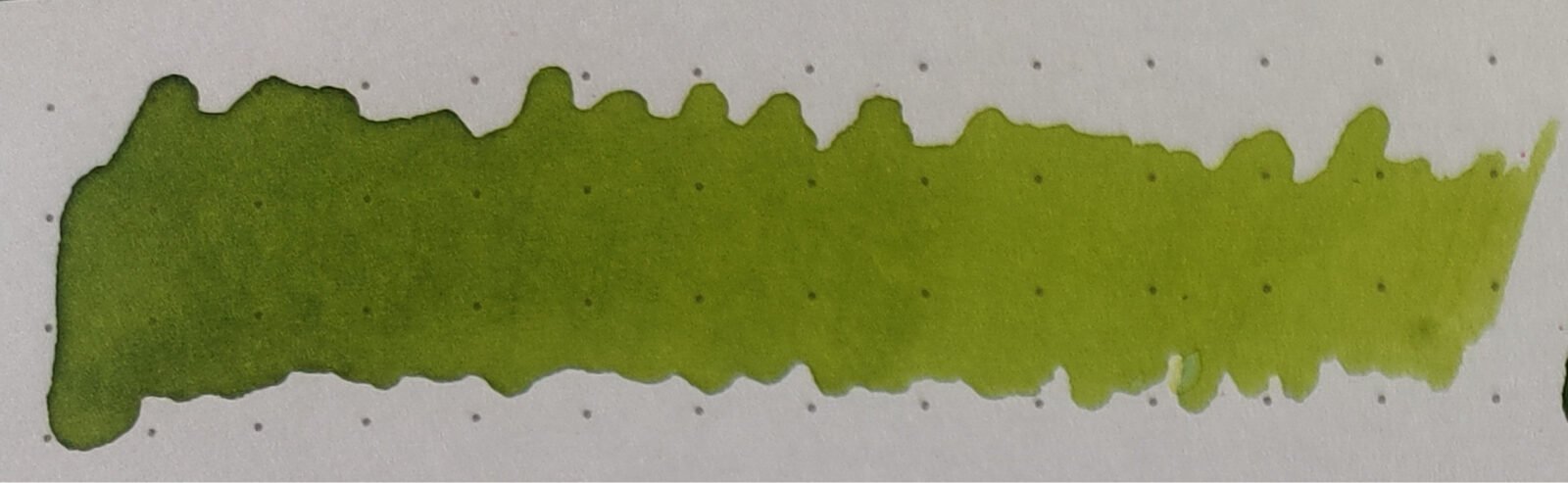
Chiku-rin sits at the paler, brighter end of the green spectrum — “a cheery yellow-green that comes alive on paper” rather than a deep, brooding forest tone. On a wetter nib the green saturates more fully, but across most pens it lays down as a light green with yellow accents running through it. It’s a genuinely happy color, closer to fresh bamboo shoots than mature foliage, and it sits noticeably lighter than something like Sailor Manyo Ukikusa in side-by-side comparisons.
Swabbed out, Chiku-rin looks considerably darker and more saturated than it reads in actual handwriting — a common trait of pale Iroshizuku shades. The yellow-green base becomes more evident in a large pooled swab, and it’s a good reference point for seeing the ink’s full color range before committing it to a page.
Writing Experience
Pilot’s Iroshizuku line is known for being consistent and well-behaved, and Chiku-rin mostly lives up to that, though it runs slightly drier than its stablemates — “noticeably drier in flow than other Pilot Iroshizuku inks”, with a touch more nib feedback on steel nibs as a result. That said, it starts reliably with no hard starts or skipping, and it stays smooth enough to be pleasant for extended writing sessions.
Shading
Shading is rated medium, and multiple reviewers agree it’s genuinely good without being theatrical — “not as dramatic as some inks, but offering a solid range of color depth across most pens”, and importantly, “shading still comes through well even in smaller nibs thanks to how light the base color already is”. That’s a nice property: you don’t need a big wet nib to see Chiku-rin do something interesting on the page.
Sheen & Shimmer
Neither is present here. Chiku-rin is a flat-finish ink through and through — “no sheen” and no shimmer particles, which fits its identity as a clean, natural-feeling green rather than a special-effects ink.
Dry Time
This is where Chiku-rin stands out. Reported dry times run remarkably fast, “consistently dry after about 8 to 10 seconds” in one tester’s measurements, with other testers clocking it slightly slower around 10–20 seconds depending on paper and nib. Either way, it’s on the faster end of the spectrum for fountain pen inks generally, which matters if you’re a lefty, an overwriter, or just impatient.
Paper Performance
Menorah Paper — On smoother, less-absorbent stock, Chiku-rin’s pale yellow-green reads clean and bright, though the lighter saturation means it can look a little thin or washed out compared to darker Iroshizuku shades — this isn’t the ink to reach for if you want bold, high-contrast lines on glassy paper.
B7TRN Paper — On more absorbent or toothier stock, the ink’s shading opens up more, and the yellow-green base deepens slightly with more ink absorbed into the fibers. On cheaper, uncoated copy-paper-style stock, expect some feathering, though bleed-through stays minimal even there.
Water Resistance
Water resistance is rated medium rather than low, which is a pleasant surprise for such a pale ink. “Under a water drip test, the yellow component of the ink washes away, but a blue-green residue remains” — meaning the line survives moisture in a muted, shifted form rather than disappearing outright. Not a substitute for a waterproof ink, but better protected than most light greens.
Cleaning & Maintenance
Cleaning is easy, consistent with Pilot Iroshizuku’s reputation across the line — “it doesn’t clog pens and doesn’t age or turn gloppy over time”, and it flushes out of converters and feeds without a fight. That combination of easy cleaning and gentle formulation is also what makes it considered vintage-safe.
Sources referenced: Goulet Pens product listings and customer reviews; The Pen Addict ink review; Mountain of Ink ink review; Inky Inspirations ink review.
Similar Inks
Sailor Manyo Ukikusa
A touch darker yellow-green, similar spring-forest energy
Diamine Spring Green
Brighter and more saturated where Chiku-rin stays pale and airy
Lennon Tool Bar Pomelo
Sits in the same pale green territory, slightly darker than Chiku-rin
Recommended Uses
Marking up notes or manuscripts — the pale brightness suits annotation and commentary rather than dense body text
Nature journaling and sketching — a natural, plant-inspired tone that pairs well with illustration
Short-form or seasonal writing — cards, seasonal notes, or anything meant to feel light and cheerful
Final Verdict
Chiku-rin is a genuinely happy ink — bright, energetic, and well-behaved in the way Pilot's Iroshizuku line generally is, with a standout fast dry time and better-than-expected water resistance for how pale it is. Its light saturation is both its charm and its limitation: lovely for annotation, art, and shorter notes, less convincing as a workhorse ink for dense, long-form writing. With it discontinued since 2022, it's also becoming more of a collector's grab than a routine restock.
Ink Windows Score
Pros
- Bright, cheerful yellow-green unlike most standard greens
- Genuinely fast dry time, among the quickest in the fountain pen ink world
- Better water resistance than most pale inks — partial recovery after water exposure
- Easy to clean, gentle formulation, safe for vintage pens
- Good shading even at smaller nib sizes
Cons
- Pale saturation limits it for dense, long-form writing
- No sheen or shimmer for those wanting visual flash
- Slightly drier flow than other Iroshizuku inks, with more nib feedback
- Discontinued since 2022, making it harder to source going forward
Frequently Asked Questions
What does Chiku-rin mean?
It translates to "bamboo forest," reflecting the ink's bright, fresh yellow-green tone.
Is Pilot Iroshizuku Chiku-rin discontinued?
No. It remains part of Pilot's active Iroshizuku catalogue and is currently stocked by major retailers.
How fast does Chiku-rin dry?
Very fast — reported dry times run around 8 to 20 seconds depending on nib size and paper.
Does Chiku-rin have good water resistance?
Better than most pale inks. The yellow component washes away under water, but a blue-green residue remains behind.